Colorado / Seasonal adventures
Fall Is the Best Season Here and It Barely Lasts
Three weeks of gold, cool air, empty trails, and a dog who suddenly has twice the energy he had in August. Here’s how to catch it.
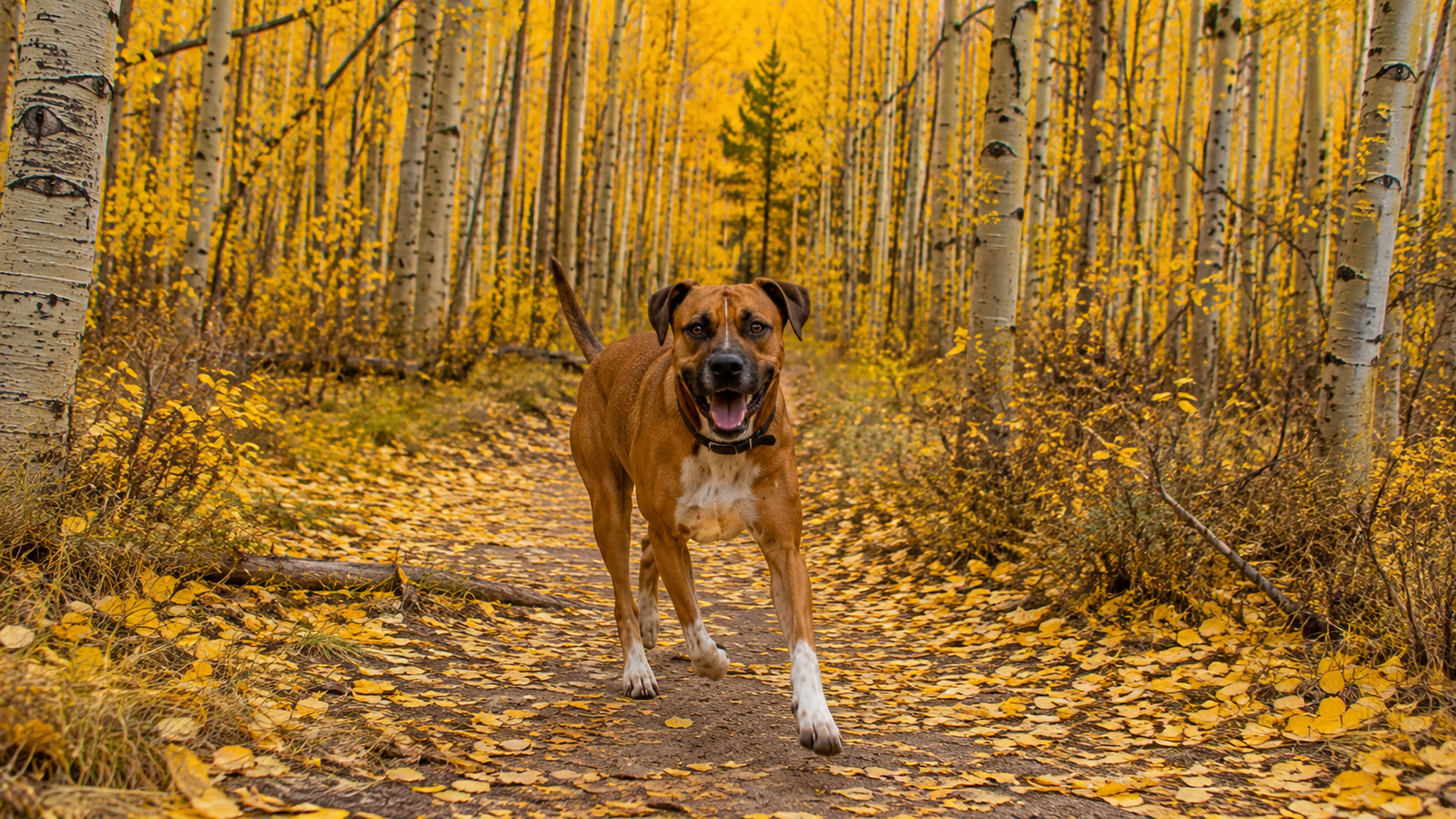
Something happens to Jaxson in late September. The heat lifts, the air gets thin and sharp, and a dog who spent August lying on the kitchen tile like a dropped towel is suddenly pulling toward the car at seven in the morning.
We feel it too, obviously. But it’s more dramatic in him, and it’s the clearest reminder that summer in Colorado is something dogs endure rather than enjoy. Fall is when they actually get to be themselves.
The catch is that it’s brief. Not a season so much as a window, and if you spend two weekends deciding, you’ve missed it.
A quick note: some links here are affiliate links. If you buy through one we may earn a small commission at no extra cost to you. We only point at gear we actually carry. Season dates were checked in September 2026 — confirm with Colorado Parks and Wildlife before you plan around them.
Colour moves downhill, and that’s the whole trick
Aspens don’t turn all at once. They turn by elevation, starting high and working down, which means “when do the leaves change in Colorado” has no single answer — it has an altitude.
The high country goes first, usually somewhere in the back half of September. The middle elevations follow. The foothills and the lower valleys are last, often into early October. So the same weekend can be past peak at 11,000 feet and a week early at 8,000.
Which is genuinely good news. If you miss it up high, drive lower. If you’re too early down low, drive higher. There’s almost always gold somewhere in between, and chasing it is half the fun.
The strategy we’ve settled on: go high early, go low late, and when in doubt drive an hour up a forest road and look. Nobody has ever regretted the drive.
The other thing nobody warns you about is how fast it ends. Aspens hold their gold until one windy night decides otherwise. A storm rolls through, and a grove that was spectacular on Saturday is bare sticks by Tuesday. There’s no gradual fade. It’s just over.
You’re sharing the woods now
Here’s the thing that separates a Colorado fall from a Colorado summer, and it’s worth understanding rather than worrying about.
Hunting seasons run right through the best hiking weeks. In 2026 archery for deer and elk runs the whole of September, muzzleloader sits inside that window in mid-September, and the four rifle seasons stack across five weeks from mid-October into late November. Exact dates shift by species and game management unit, so the Big Game Brochure from Colorado Parks and Wildlife is the thing to check rather than a blog.
This is not a reason to stay home. Hunters and hikers have shared Colorado’s national forests forever and it works fine. It’s a reason to be visible.
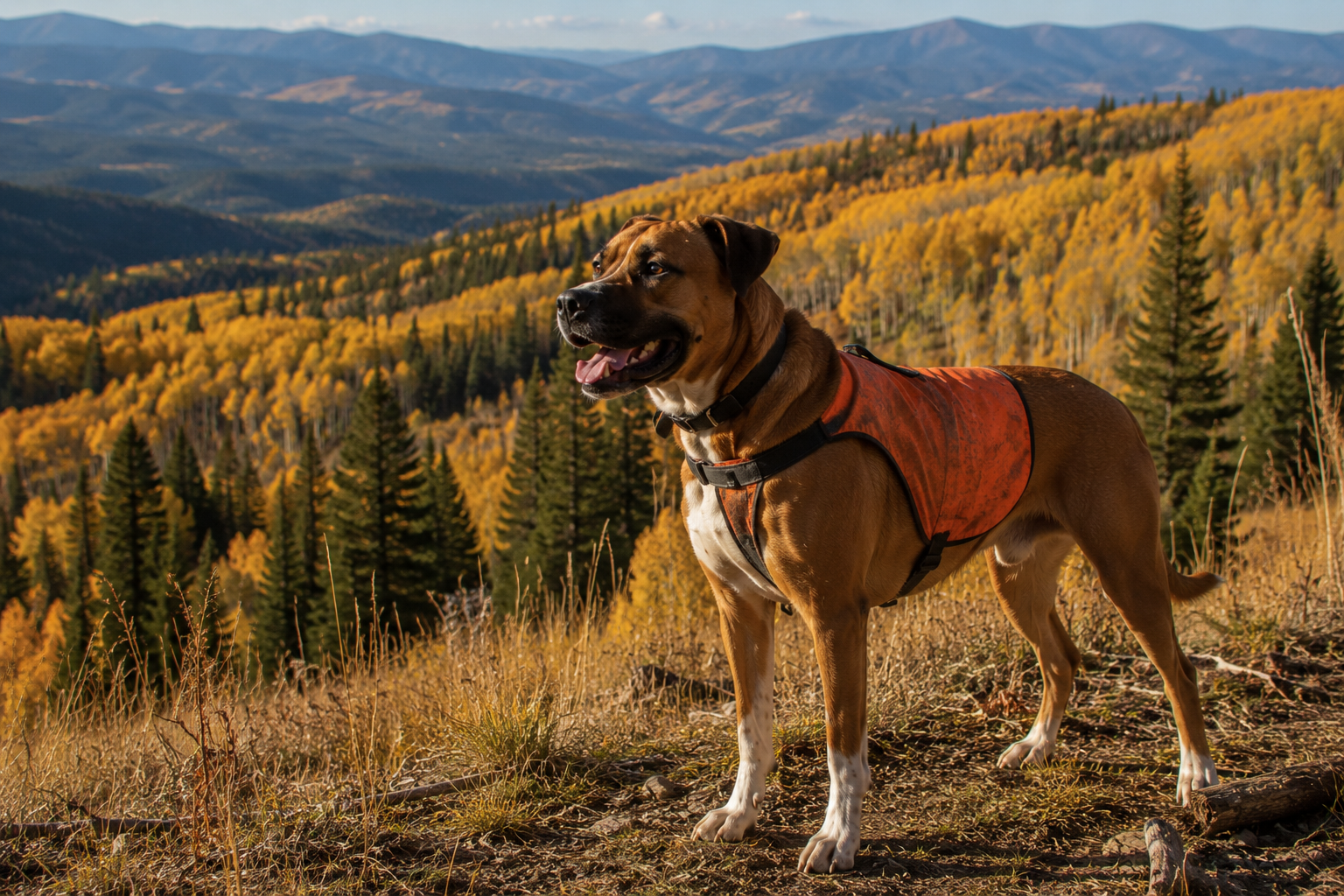
A blaze orange vest on your dog isn’t paranoid, it’s just courteous — it makes you both easy to identify at distance, which is exactly what somebody glassing a hillside wants. Something orange on you too. Jaxson finds the vest undignified and gets over it within about four minutes.
Beyond that: stick to established trails, especially at dawn and dusk when the light is worst and the animals are moving. Keep him close, or on a lead if his recall gets patchy when there’s more to smell. And it costs nothing to say hello to anyone you pass in orange — most of them are perfectly happy to tell you which drainage they’re working so you can go elsewhere.
The fall calendar, roughly
Early September
Still summer at most elevations, but the nights turn. Best month to go high before the passes get unreliable. Archery season opens, so orange goes in the pack from here on.
Mid to late September
The high country turns. This is the window everyone means when they say fall in Colorado, and it’s roughly two weeks long. Elk are bugling, which is extraordinary to hear and a very good reason to keep a dog leashed.
Early October
Colour drops to the middle and lower elevations. Crowds thin noticeably after the first weekend. Arguably the sweet spot — good colour, good temperatures, fewer people.
Mid to late October
The gates start closing. Trail Ridge Road and Independence Pass shut for winter around now. Rifle seasons begin. First real snow up high, which is beautiful and turns trails to mud lower down.
November
Quiet, cold, and underrated. The colour’s gone but so is everyone else, and a dog in a coat on an empty trail in November is a genuinely good afternoon.
The light goes early and it catches everyone out
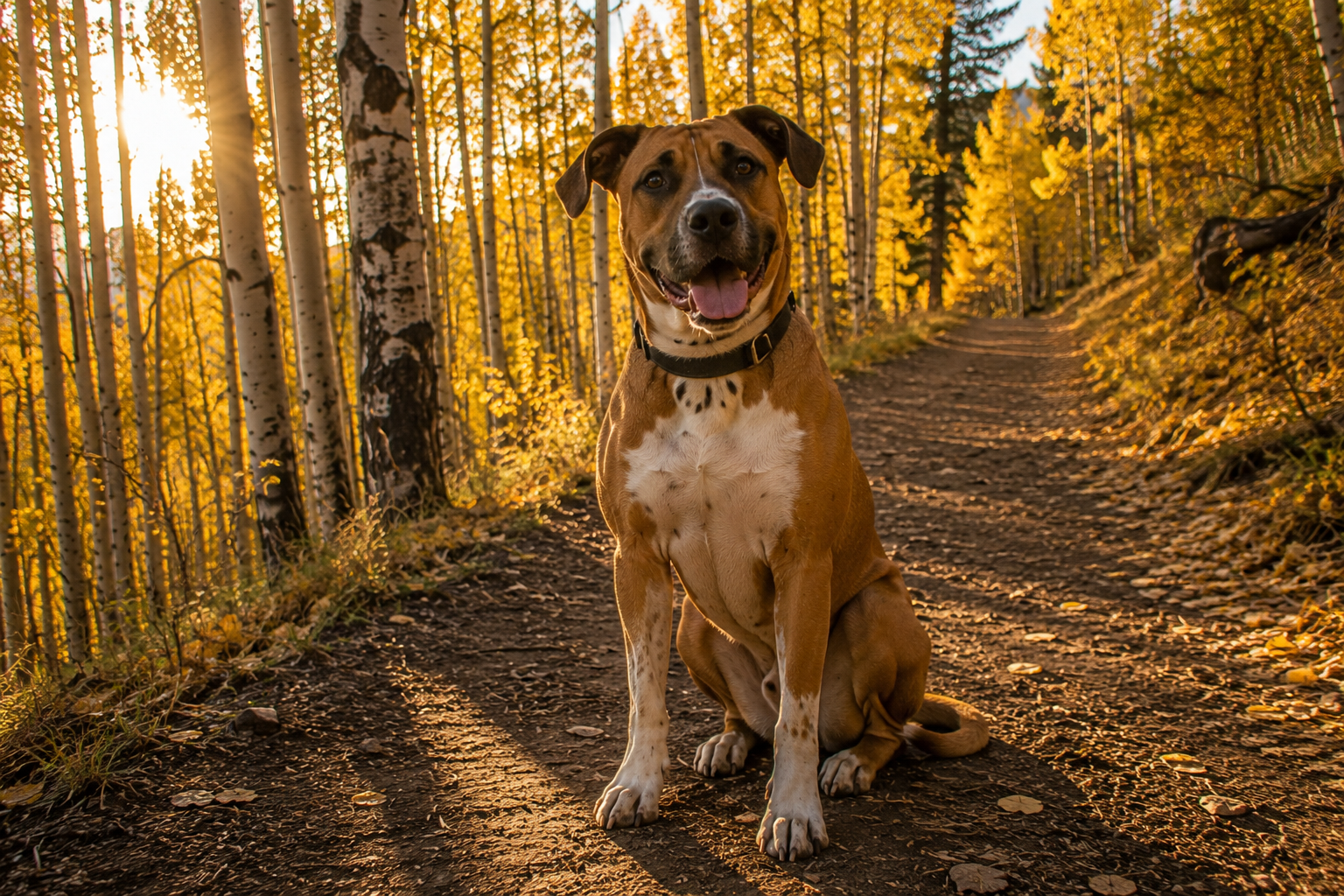
The best-looking hour of the entire year in Colorado is late afternoon in October, when the sun comes in sideways through aspen trunks and the whole grove lights up from behind.
It’s also the hour that ends much sooner than your summer instincts expect. A trail you comfortably finished at seven in July has you walking the last mile in the dark by mid-October, and once the sun drops behind a ridge the temperature follows it immediately.
So we start earlier than feels necessary and turn around earlier than feels necessary. A light-up collar on Jaxson has stopped being a summer camping thing and become a standard autumn item, because a tan dog fifteen feet off the trail at dusk is completely invisible. A headlamp in your own pocket, always, even on a short one.
The upside of the early light is that it’s genuinely the best photography of the year, and you don’t have to get up at four to find it. Just be somewhere good at four in the afternoon.
Go high early. Go low late. When in doubt, drive.The entire fall strategy, and it has never once let us down.
What leaves do to a trail
A fresh layer of aspen leaves is one of the great pleasures of autumn and also a fairly effective camouflage system.
Under that gold carpet: roots, loose rock, holes, and the occasional stick standing at exactly the wrong angle. Wet leaves on rock are properly slippery, and dogs discover this at speed. It’s rarely serious, but it’s the season when a dog most commonly comes up lame on the way back to the car for no reason you saw happen.
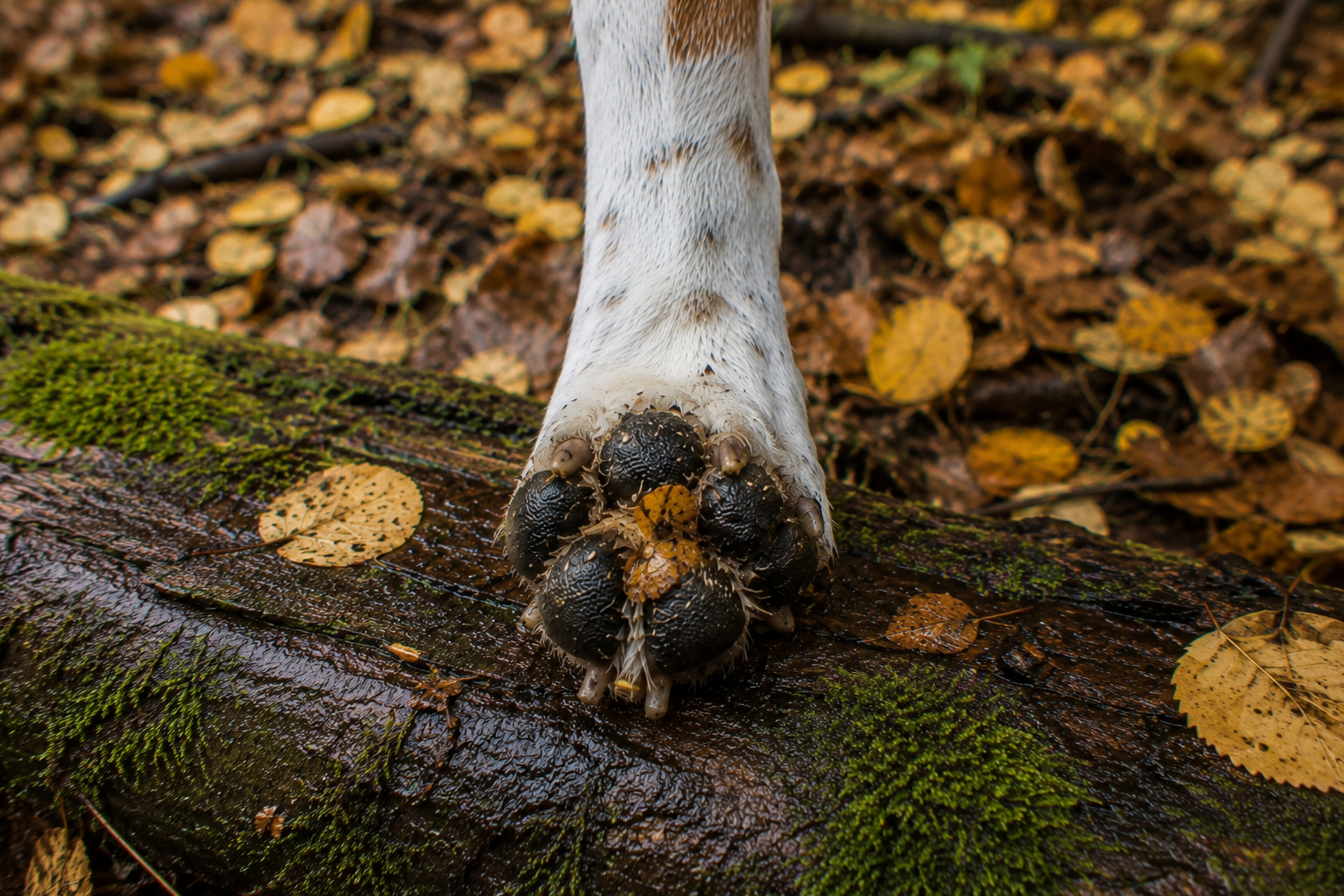
Leaves and grit also pack between the pads, especially when everything’s damp. We check his feet at the tailgate now as a matter of routine rather than because something looks wrong. Takes thirty seconds, and it’s how you catch a cut before it turns into three days of limping.
Cold, dry autumn air also does a number on pads that have spent all summer on soft dirt. A little paw balm once the temperature drops is one of those small habits that saves you a vet visit in December.
And mud. Fall is when trails go soft and stay soft, and walking a muddy trail widens it permanently. If you’re sinking in and the tread is turning to soup, that’s the trail telling you to go somewhere lower and drier — not a challenge to push through.
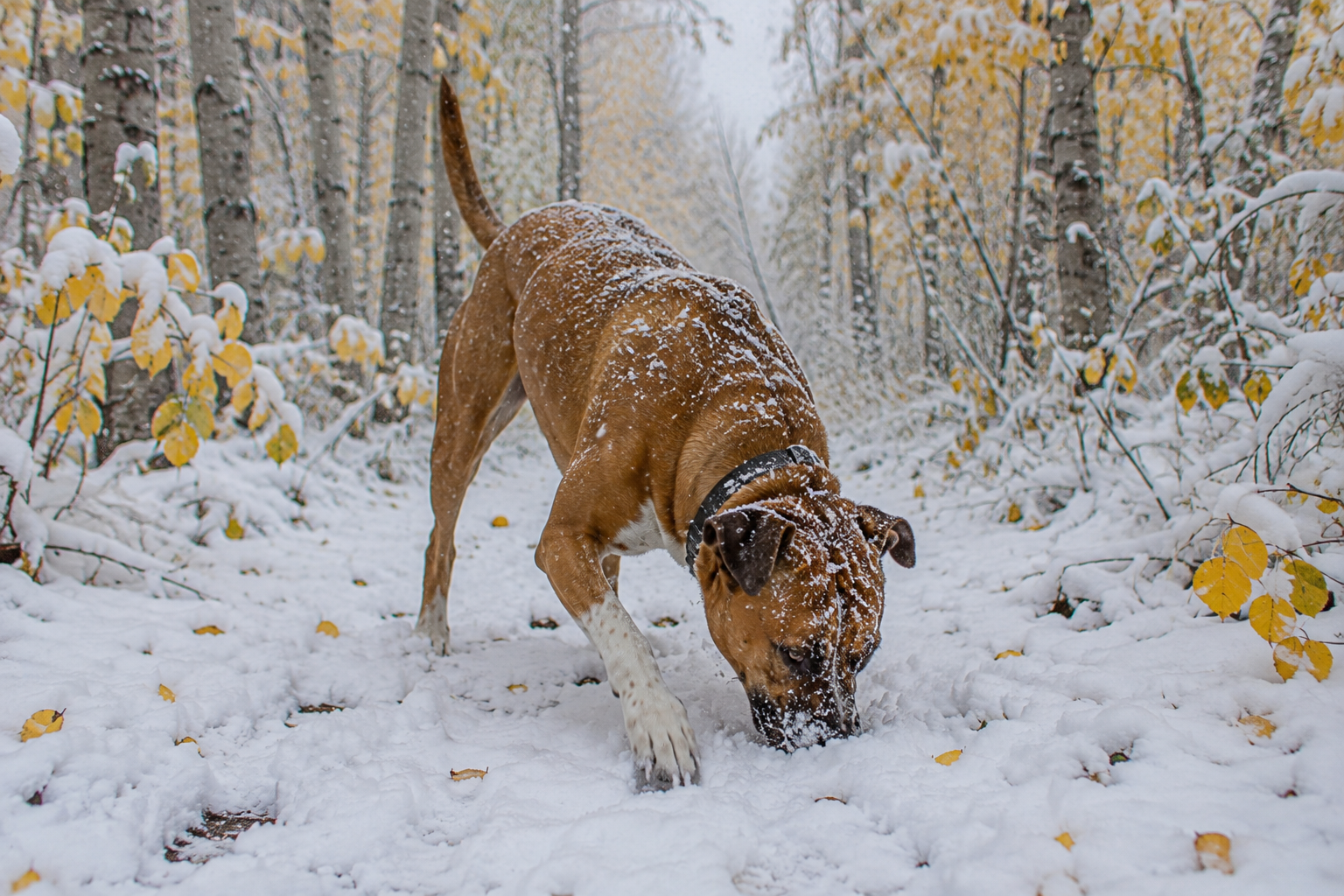
It will snow on you and that’s the good part
Somewhere in October, usually with very little warning, it snows up high while it’s still perfectly pleasant in Denver. People get caught out by this every single year.
An hour’s drive can put you in a genuinely different season. Sixty degrees at the trailhead in Boulder does not mean sixty degrees at 11,000 feet, and the gap between them widens the moment the sun goes behind something.
What this means practically is that autumn is layering season for both of you. A short-coated dog like Jaxson has essentially no insulation, and standing still at a viewpoint in a cold wind is very different from moving. An insulated dog coat lives in the car from October onward — not for the walking, for the stopping.
A quick-dry towel earns its place too. A wet dog in a cold car is a miserable dog for the entire drive home, and it’s the difference between him falling asleep in the back and shivering the whole way.
But honestly, the first snow with a dog is one of the best things about living here. Jaxson loses his mind in it every year, without fail, as though the concept is entirely new. It’s worth planning for just to watch.
Fall in Colorado asks very little of you. Show up early, wear something orange, check his feet at the car, and go before the wind does its thing. That’s most of it.
The part that takes years
Knowing the pattern is the easy half. The harder half is knowing which groves are worth the drive in the third week of September, which forest roads turn to gold with nobody on them, which trails stay dry when everything else goes to mud, and where to be at four in the afternoon. That’s the part we’ve been building destination by destination.
See the Colorado Dog Adventure GuideWorth checking
- Big Game Brochure and current season dates — Colorado Parks and Wildlife
- Fall colour reports and forest road conditions — the relevant National Forest’s website
- Pass closures and statewide road conditions — dial 511 in Colorado, or COtrip
- Trail Ridge Road recorded status line — 970-586-1222