Colorado / Swimming
Where Your Dog Can Actually Swim in Colorado
Most lists of dog-friendly lakes are wrong. Here’s the short, verified version — plus the state rule that quietly bans dogs from nearly every beach in Colorado.
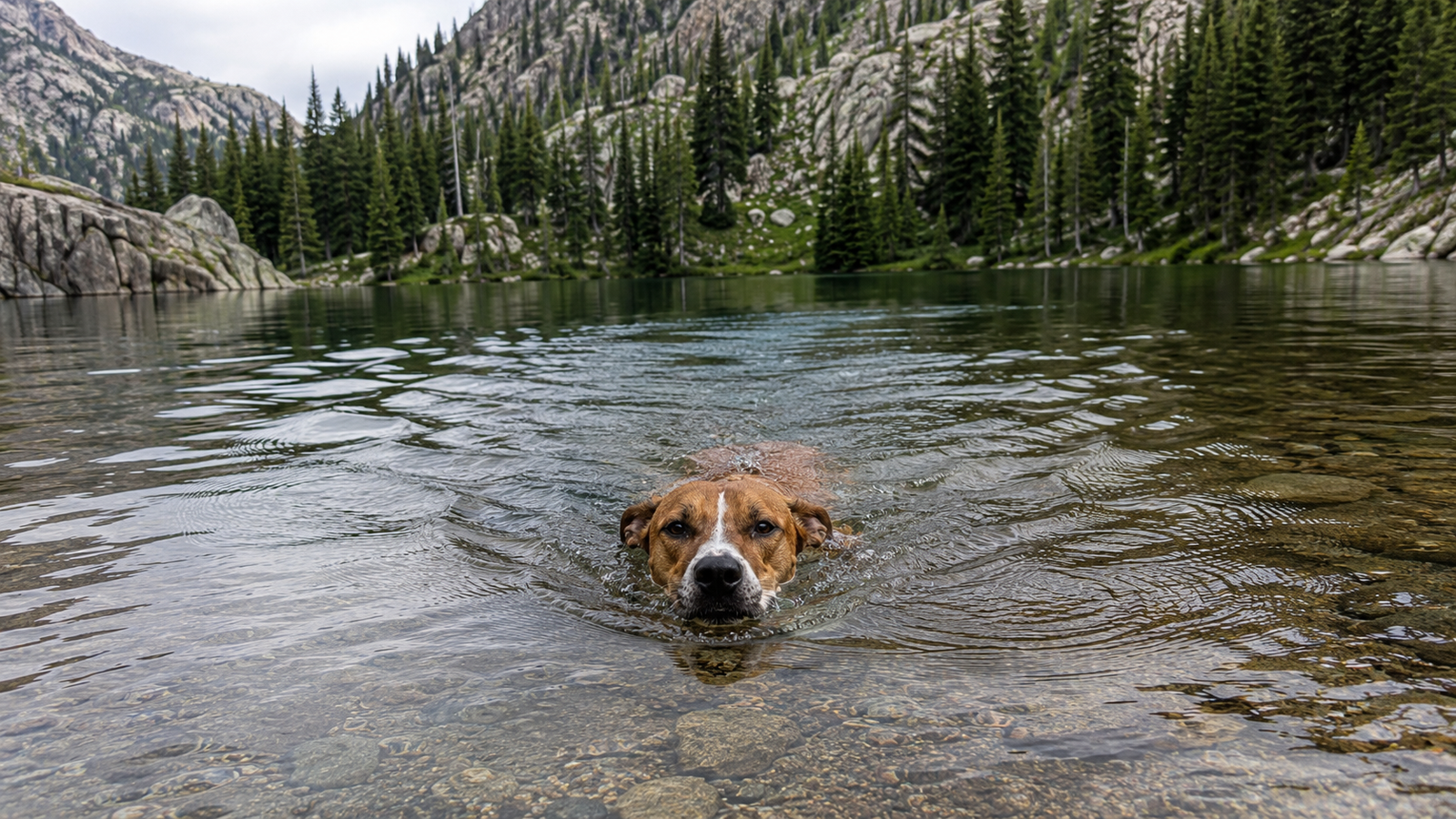
There is a version of this article that lists twelve gorgeous Colorado lakes and tells you to take your dog to all of them. That article would get more clicks than this one. It would also get you turned around at a gate.
When we started looking properly, the honest answer turned out to be much narrower than the internet suggests — and understanding why it’s narrow is the thing that makes you able to work it out for any lake in the state, not just the ones on somebody’s list.
A quick note: some links in this article are affiliate links. If you buy through one we may earn a small commission at no extra cost to you. We only ever point at gear we actually carry. Rules and fees below were checked in September 2026 — always confirm with the managing agency before you drive.
The rule that explains almost everything
Colorado Parks and Wildlife regulation makes it unlawful to allow a dog or other pet within any area used as a swimming or water-ski beach. That’s a statewide rule covering every state park, and most county and city reservoirs mirror it in their own regulations.
Read that again, because it’s doing a lot of work. The place at a lake that’s shallow, sandy, gently sloped and obviously perfect for a dog to swim — the swim beach — is precisely the one place your dog legally cannot be.
That same regulation names exactly two exceptions on CPW land in the entire state: the designated dog off-leash area at Chatfield State Park, and the designated dog off-leash area at Cherry Creek State Park.
Two places in Colorado were purpose-built for dogs to swim. Everywhere else is an exercise in reading signs carefully.
That isn’t a reason to stay home. It’s a reason to know which category the lake you’re driving to falls into before you load the car.
There are three categories, and every lake in Colorado sits in one of them:
- Designed for dogs
- Chatfield and Cherry Creek off-leash areas. Water access is the point. Dogs off leash, in the water, legally.
- Dogs allowed, beach off-limits
- Most county and state reservoirs. Leashed dog on the shoreline and in the water away from the designated beach, usually fine. On the beach itself, never.
- Nobody gets in
- Drinking-water reservoirs. No body contact for humans or dogs, ever, regardless of leash. You can often still paddle and fish.
If you learn to sort a lake into one of those three before you go, you’ll never waste a drive again.
Before any of it: check the water
This comes before the location list because it overrides the location list.
Blue-green algae
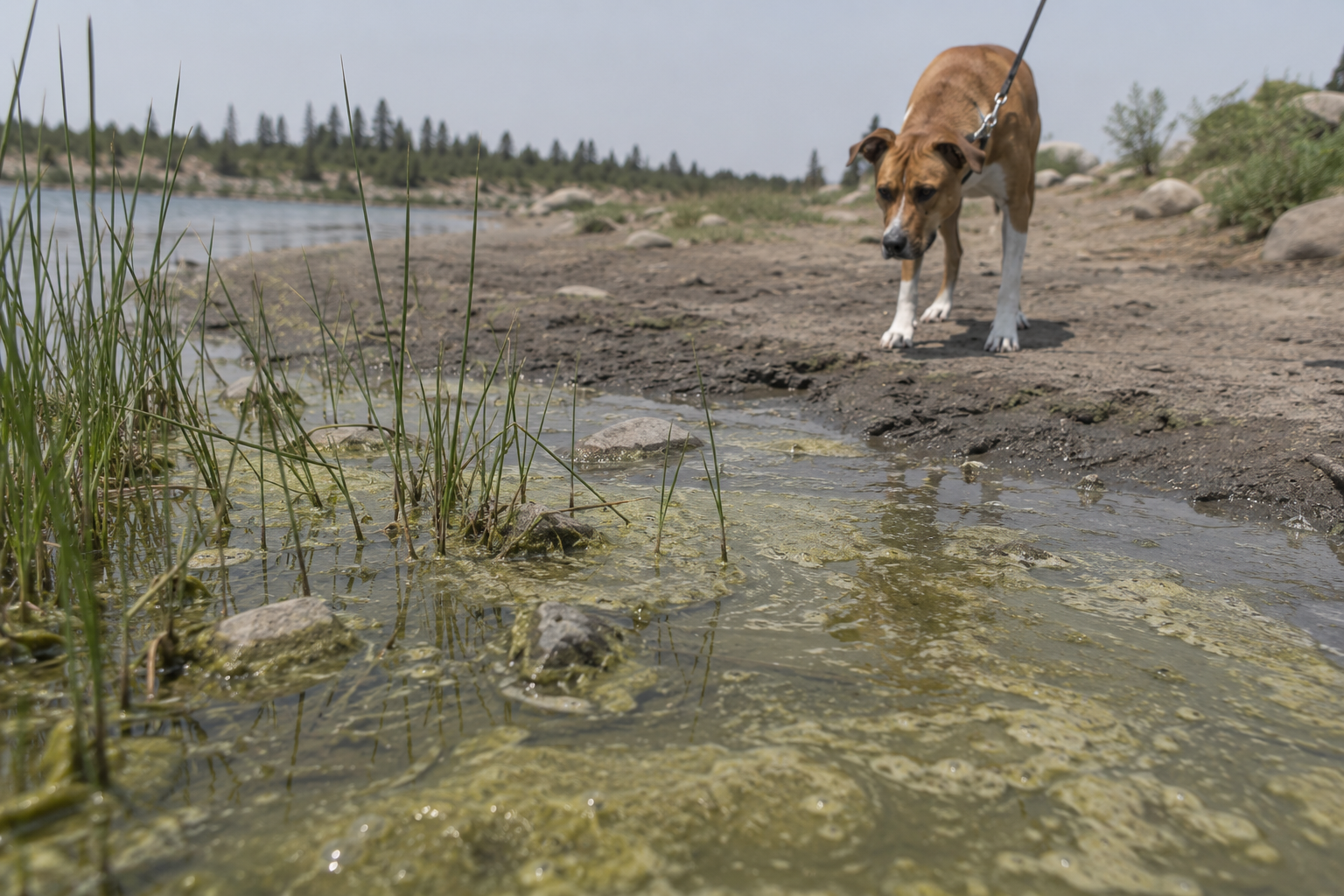
Blue-green algae is cyanobacteria, and some blooms produce toxins that are potentially lethal to dogs. It’s a Colorado problem, not an imported scare story — Cherry Creek Reservoir and Prospect Lake in Colorado Springs have both closed for it, and warnings have hit lakes in Boulder, Denver, and Aurora in recent summers. Peak season runs roughly June through September, when water sits warm and still.
Dogs take a far worse hit than people. He wades straight through a bloom, drinks some of it, then licks it off his coat for the rest of the afternoon. Blooms collect in exactly the calm, sheltered cove that looks ideal for throwing a stick into. And a thirty-pound dog is absorbing a dose that would barely register in an adult.
You cannot tell by looking. Only a lab test can. A bloom might look like pea soup, or spilled blue-green paint, or a foam mat gathering along the shore — and sometimes it has no colour at all. The long stringy bright green strands are usually the harmless kind, though that’s not a rule worth betting a dog on.
Signs can appear within minutes to a few hours: vomiting, drooling, tremors, seizures, collapse. If you think he got into a bloom, rinse him with clean water immediately, stop him licking, and get to a vet. Don’t wait for symptoms to develop.
Practically: check the Colorado Department of Public Health and Environment’s harmful algal bloom advisories the morning you go, and look at the actual shoreline when you arrive. If the cove looks wrong, the answer is no. This is the part of the day Jaxson considers a personal betrayal, and it is not negotiable.
When in doubt, stay out.Colorado health officials repeat it every summer. It’s the right rule.
The two places built for this
Chatfield State Park Dog Off-Leash Area
Littleton, CO 80125 · 303-791-7275 · open 5am to 10pm daily
Sixty-nine acres, two ponds, walking trails, two parking lots, restrooms. It is the largest off-leash area in Colorado and it is the single best place in the state to let a dog swim without thinking about it.
What you need: a park entrance pass and a separate dog off-leash pass. The DOLA pass runs $3 for a day or $25 annually, and one pass covers a handler with up to three dogs. Buy them at the entrance station, the visitor centre, or the self-service station. The Keep Colorado Wild pass does not include off-leash fees — that catches people out.
Your dog must be under voice control inside the area and on a leash between the car and the gate. Leashed dogs are welcome everywhere else in the park too, except the swim beach.
Two honest notes. Parking fills early on summer weekends — the regulars will tell you the same thing. And the ponds get churned up and murky by mid-afternoon in high season, which is a good argument for going early and for rinsing him off before he’s back in your car.
Cherry Creek State Park Dog Off-Leash Area
South entrance: S Entrance Rd, Aurora, CO 80015. North access: 12 Mile North Parking Access, Aurora, CO 80015. Park headquarters: 4201 S Parker Rd, Aurora, CO 80014 · 303-690-1166 · open 5am to 10pm daily
107 acres, with Cherry Creek running through it. The creek banks were renovated for erosion control, which had the side effect of making water access much easier. It’s shallow, slow-moving creek water rather than a pond — which makes it the better choice for a dog who’s nervous about swimming, and the lesser choice for a dog who wants to actually swim.
Same structure as Chatfield: park pass plus a $3 daily off-leash pass, three dogs per handler, leash and waste bag carried for each dog.
The thing to know before you go. The area is not completely fenced. There’s no fence along the creek. If your recall isn’t genuinely solid, this is not the place to test it — start at Chatfield instead, or keep him on a long line until you know how he handles the space.
Paddleboarding, which is a different question entirely
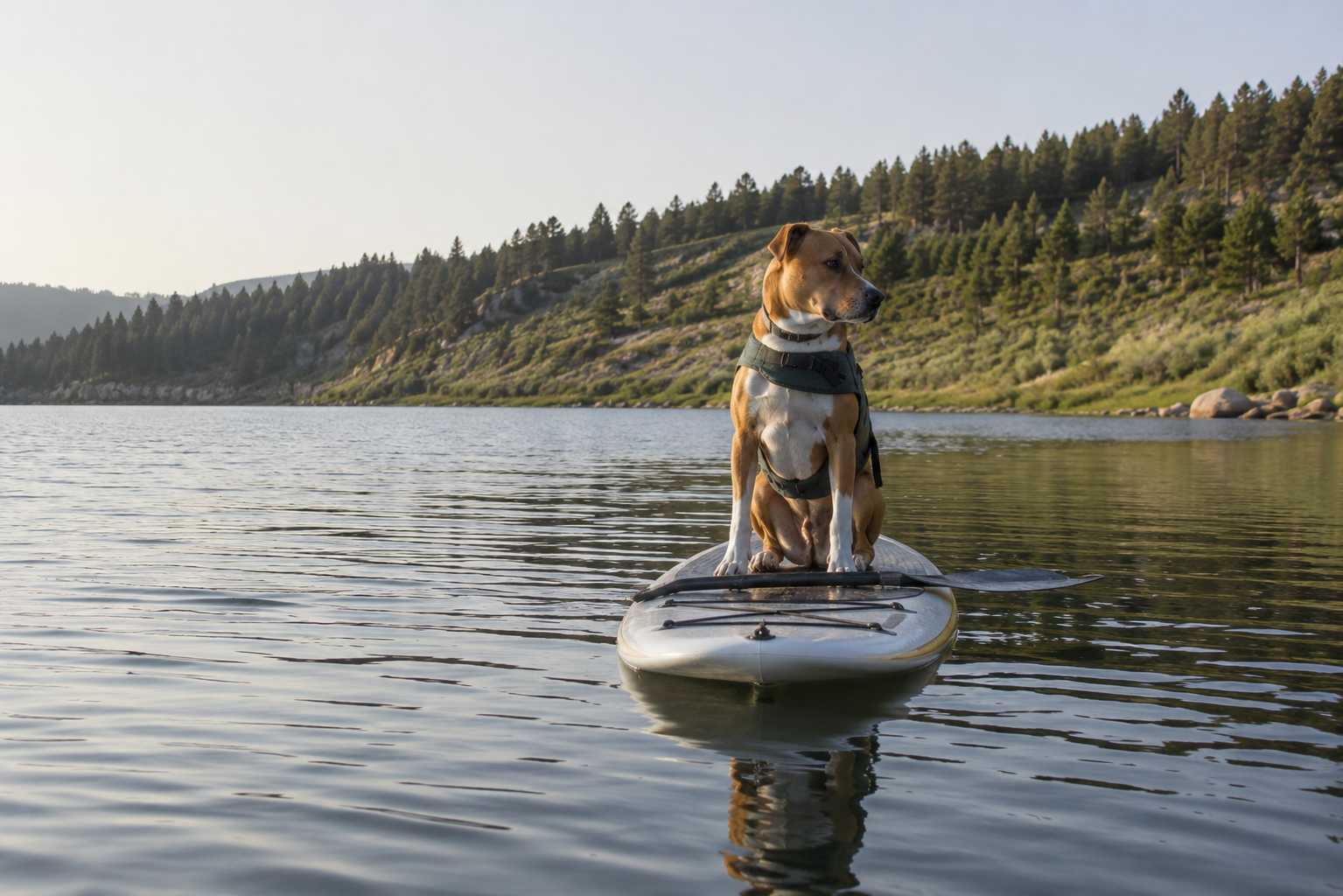
Here’s the useful distinction: a lake that won’t let your dog swim will often happily let him ride. Body-contact rules govern being in the water. Sitting on a board is not being in the water.
That opens up places you’d otherwise write off.
Horsetooth Reservoir
West of Fort Collins, Larimer County · 970-619-4570 · 5,420 feet
Six and a half miles of water. Paddle craft can launch from the shore at Inlet Bay, South Bay, Satanka Cove, and Sunrise Swim Beach. An entrance permit is required per vehicle, and there’s a second permit for trailered watercraft.
Dogs must be leashed at all times, on a lead no longer than ten feet, and are not allowed at either swim beach. Swimming for people is restricted to the designated swim beaches, which run Memorial Day weekend through around October 1 — dates shift year to year, so call.
Carter Lake
Southwest of Loveland, Larimer County · 5,760 feet
Eleven hundred acres, nearly three miles long, surrounded by another thousand acres of public land. Larimer County calls it one of the best paddling spots in northern Colorado and they’re not overselling it. Entrance permit required, open year round.
Same dog rules as Horsetooth: ten-foot leash maximum at all times, no dogs at the swim beach.
Standley Lake
11610 W 100th Ave, Westminster, CO 80021 · 303-425-1097
Worth including precisely because it’s the trap. It’s beautiful, it’s close to Denver, and it supplies drinking water to Westminster, Thornton, and Northglenn. No body contact is permitted — not for people, not for dogs, not ever. Leashed dogs are fine on land, and dogs may ride paddle craft provided they wear a life jacket.
If you turn up expecting a swim, you’ve wasted the drive. If you turn up expecting a paddle with a dog on the front of the board, it’s excellent.
Larimer County’s own paddling guidance for dogs is worth repeating because it’s better than most: put a flotation vest on your dog, keep him leashed if he’s an unsure swimmer, stay close to shore and in the calmer coves rather than the channel, and avoid boat wakes. Reservoir water gets choppy fast and chop overwhelms a dog much sooner than it overwhelms you.
One more thing about the vest: the point isn’t buoyancy, it’s the grab handle. Hauling a soaked sixty-pound dog back onto a board by his collar isn’t something you want to attempt once, let alone twice.
Cold water is the risk people underestimate
Dillon Reservoir bans swimming outright, and the reason Denver Water gives is instructive: the water is dangerously cold, roughly 65°F at its warmest, and thin air at altitude makes cold-water shock worse. They also point out that rescue on a lake that size is genuinely difficult.
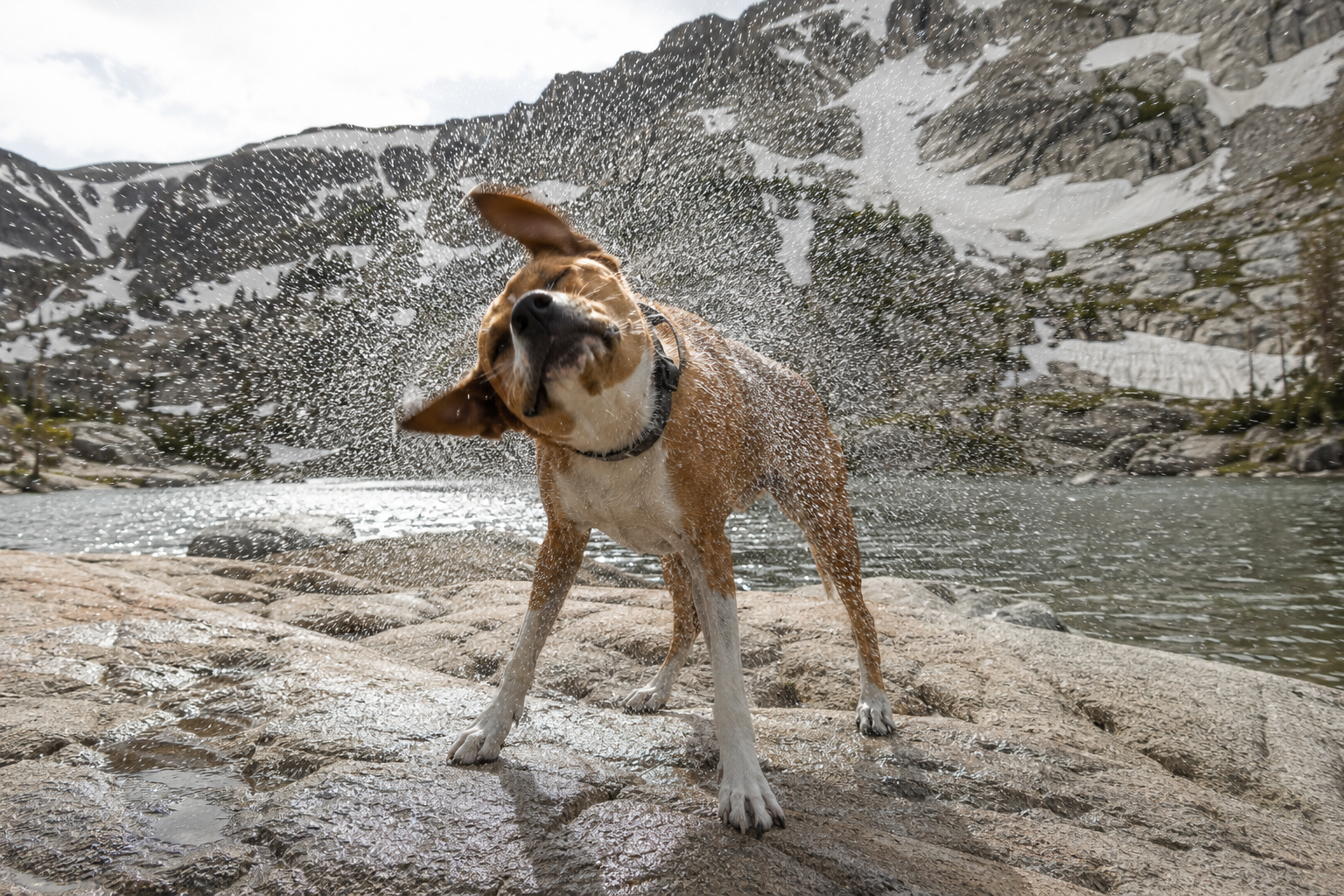
That reasoning doesn’t stop being true at lakes where swimming is legal. A dog who has swum happily all summer in a warm reservoir can get into trouble fast in snowmelt. Cold water causes an involuntary gasp and then muscle failure, and it happens in minutes — long before hypothermia would.
Signs your dog is getting cold: shivering, slowing down, swimming lower in the water, or turning for shore without being called. Get him out and get him dry. A quick-dry towel in the car is not a luxury item at 10,000 feet in June.
And keep an eye on how much he’s swallowing. A dog who repeatedly retrieves from water can take on enough of it to make himself genuinely unwell — bring a floating toy he can grab cleanly rather than one he has to bite at, and make him take breaks whether he wants them or not. He will not want them.
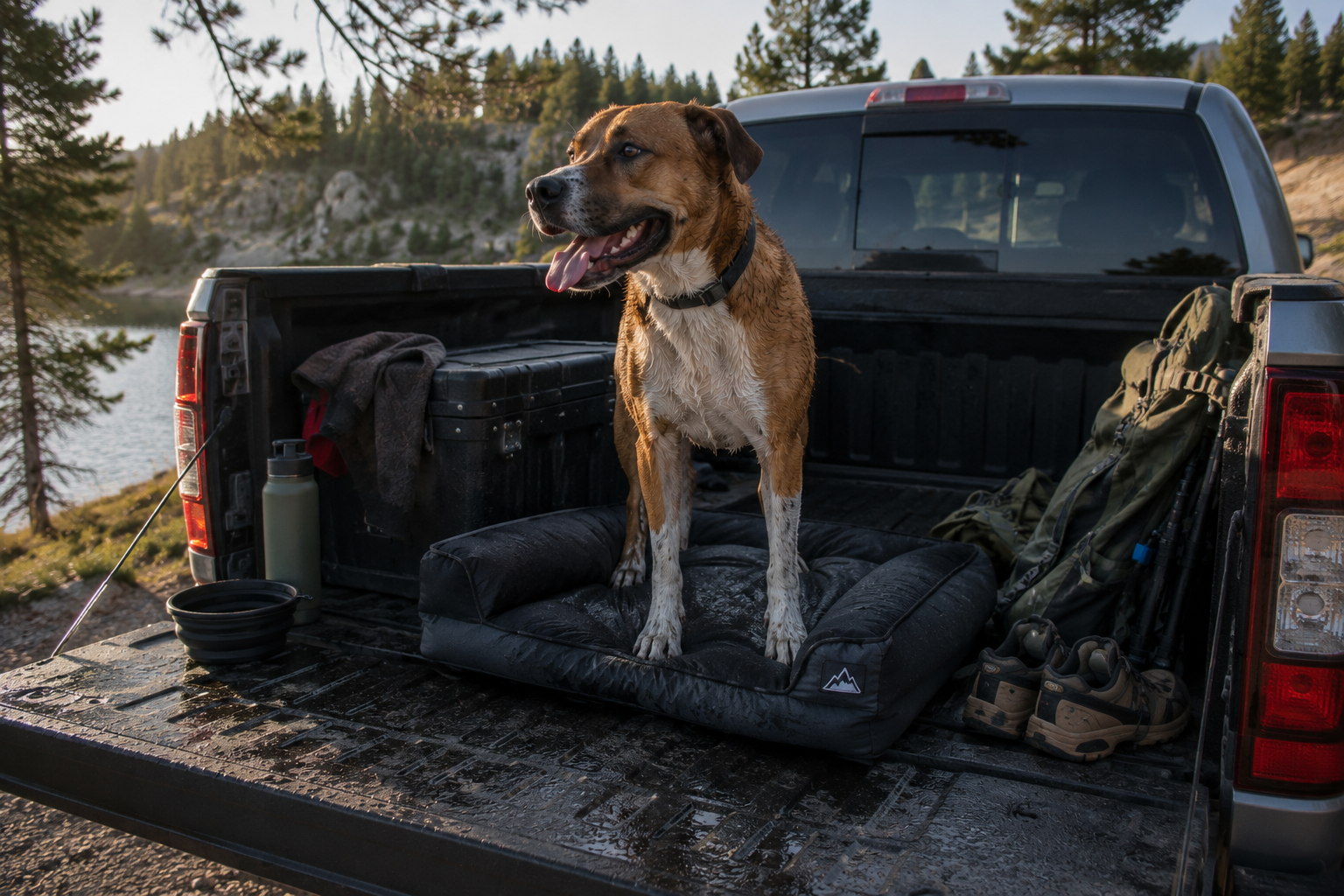
The five minutes at the tailgate
What you do after the swim is the part that keeps you out of the vet’s office, and almost nobody bothers.
- Rinse him with clean water. Reservoir and pond water leaves silt, bacteria, and whatever else in his coat, and he’ll spend the drive home licking it off.
- Dry his ears. Trapped water is the single most common cause of ear infections in dogs who swim, and drop-eared dogs are worst affected. A wipe with a cloth, and a proper ear-drying solution if he swims often.
- Check between his toes and pads. Silt, grit, and small stones collect there and you won’t notice until he’s limping.
- Get him properly dry before he sits in the car. A cold wet dog in air conditioning for an hour is a miserable dog.
- Watch him for the rest of the day. Lethargy, vomiting, or unsteadiness after a swim is worth a call to a vet, not a wait-and-see.
None of it takes long. All of it is easier than the alternative.
How to check any lake yourself
The list above will go out of date. This method won’t.
Find out who owns the water. A state park means Colorado Parks and Wildlife rules apply, which means no dogs on the swim beach and leashes everywhere outside the two off-leash areas. A county park means county regulations — Larimer’s ten-foot leash rule, for example, is stricter than the state’s general requirement. A municipal utility means it’s somebody’s drinking water and nobody is getting in.
Then check three things separately, because they’re genuinely different questions: are dogs allowed on site, are dogs allowed in the water, and is the water currently safe. A lake can pass the first and fail the other two on the same afternoon.
And confirm it with the agency’s own page rather than a blog. Including ours. Fees, permits, beach dates, and seasonal closures all shift year to year, and the managing agency is the only source that’s current by definition.
The part that takes years
Six lakes is a start. Knowing which coves stay calm, which pullouts have shade, which spots are empty at nine on a Saturday, and which places quietly work even though no list mentions them — that’s the part that takes a lot of weekends and a lot of wrong turns. We’ve been putting it together destination by destination, and Colorado is where it starts.
See the Colorado Dog Adventure GuideSources, and what to check before you go
- Harmful algal bloom advisories — Colorado Department of Public Health and Environment
- Chatfield State Park activities, passes and dog rules — Colorado Parks and Wildlife
- Cherry Creek State Park off-leash area — Colorado Parks and Wildlife
- Horsetooth Reservoir regulations and Carter Lake regulations — Larimer County
- Paddle craft safety, including guidance for dogs — Larimer County
- Dillon Reservoir recreation rules — Denver Water
- State park pet regulations, 2 CCR 405-1 — Colorado Secretary of State