Colorado / Camping with dogs
Camping With Your Dog in Colorado
Nobody sleeps much on the first night. Everything after that is the reason people move here.
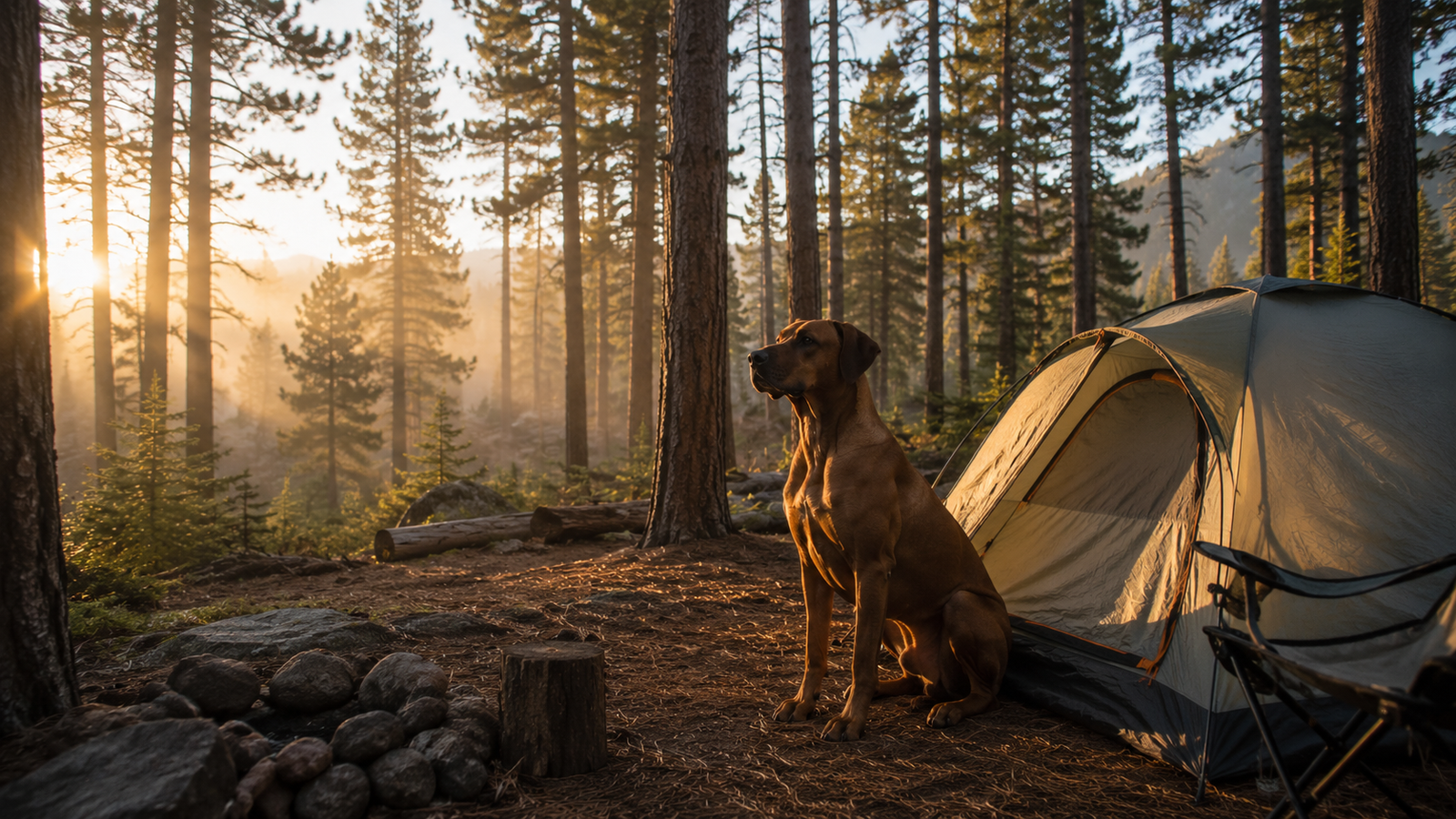
There is a specific kind of quiet at 10,000 feet after the wind drops, and a dog asleep against your leg while it happens is one of the genuinely good things available in this life.
Getting to that point takes a bit of homework. Not much. But Colorado has a few rules that change through the season and a few hazards that are worse at night, and the difference between a great weekend and a miserable one is usually something you could have checked on your phone before leaving the house.
Jaxson is part Rhodesian Ridgeback, part Boxer, and his position on camping is that every single sound outside the tent requires immediate investigation and a full report. He has since mellowed. Slightly.
A quick note: some links in this article are affiliate links. If you buy through one we may earn a small commission at no extra cost to you. We only ever point at gear we actually carry.
There are two kinds of camping here, and they’re barely related
Worth understanding the difference before you book anything, because people use the word “camping” for both and then get a nasty surprise.
- Developed campgrounds
- A numbered site, a picnic table, an agency-installed fire grate, a toilet somewhere within walking distance. You reserve it, you pay for it, and anywhere decent fills up months ahead for summer weekends. Dogs are generally welcome and generally required to be leashed. This is the gentle version and there’s no shame in it.
- Dispersed camping
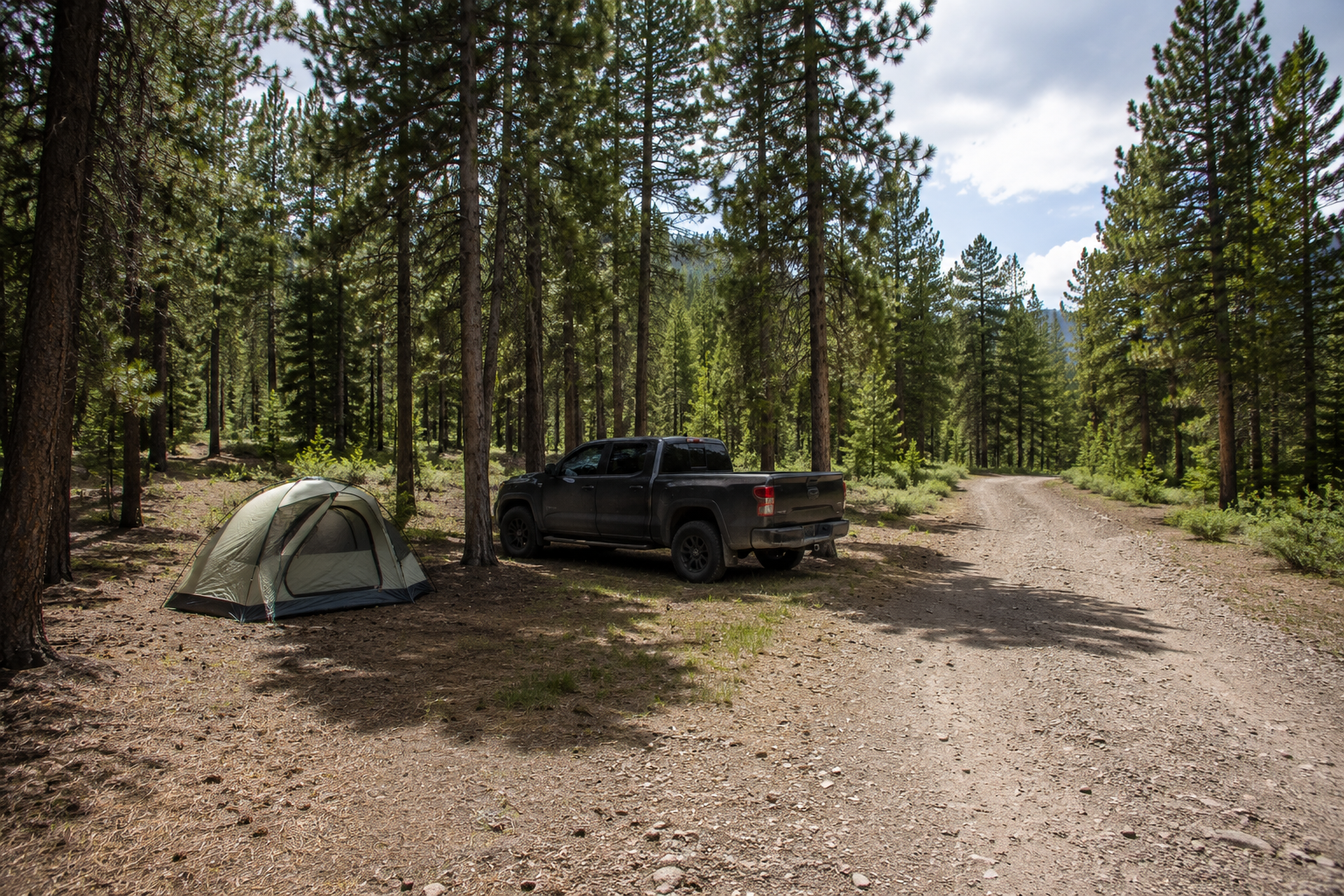
- Free, no booking, no fee, no facilities of any kind. You drive a forest road, find a clearing that’s already been camped in, and that’s your spot. Better experience, asks considerably more of you. This is where most of our nights out happen.
And one that catches people out:
Rocky Mountain National Park is not an option for this.
Dispersed camping isn’t allowed in the park at all — overnight stays are at designated sites only, and backcountry trips need a physical wilderness permit. On top of which dogs are banned from every trail in the park anyway.
Go to the surrounding national forest instead. Same mountains, no permit, dog welcome.
The dispersed camping rules, in plain English
These are the ones that apply almost everywhere on national forest and BLM land in Colorado. None of them are hard.
Fourteen days, then move. The general baseline is a 14-day stay limit before you have to relocate. How far you have to move, and whether the window is 28 or 30 days, varies by forest — and some high-use districts cut the limit shorter than 14. Not something most weekend campers will ever bump into, but worth knowing it exists.
Stay back from the water. You need to camp a set distance from streams and lakes — commonly 200 or 300 feet depending on which forest you’re in. This one genuinely matters for water quality, and with a dog it also keeps him from treating the creek as a drinking fountain all night.
Use a site that already exists. Existing pullouts, existing fire rings, existing bare ground. Making a new clearing or a new ring does damage that lasts decades. Vehicles have to stay on designated routes too — driving off-road to reach a better view is both illegal and exactly the thing that gets areas closed.
Don’t cut anything living. Downed and dead wood only, where fires are allowed at all.
Pack out everything, including his. No trash, no dishwater poured on the ground, and dog waste comes home with you. Leaving a bagged pile beside the road is somehow worse than not bagging it.
Here’s the important caveat on all of the above: every national forest publishes its own order, and those orders change season to season. A spot that was legal two summers ago may be posted closed now. Check the specific forest’s alerts page before you go rather than trusting a blog — including this one.
Fire restrictions are not a formality
This is the single most common way a Colorado camping plan falls apart, and it’s the thing to check last, closest to departure.
There is no statewide fire ban. Restrictions are set separately by each county, national forest, BLM district, and park, which means the answer genuinely depends on exactly where you’re going. And the stage can change with very little notice when things dry out.
What the stages actually mean
No restrictions. Campfires are generally fine in designated grates at developed campgrounds and at lawful dispersed sites.
Stage 1. Campfires only in permanent, agency-installed metal or concrete grates at developed campgrounds. That means no fire at all at a dispersed site — and charcoal counts as fire, so the grill is out too.
Stage 2. Wood and charcoal banned everywhere, including in developed campground grates.
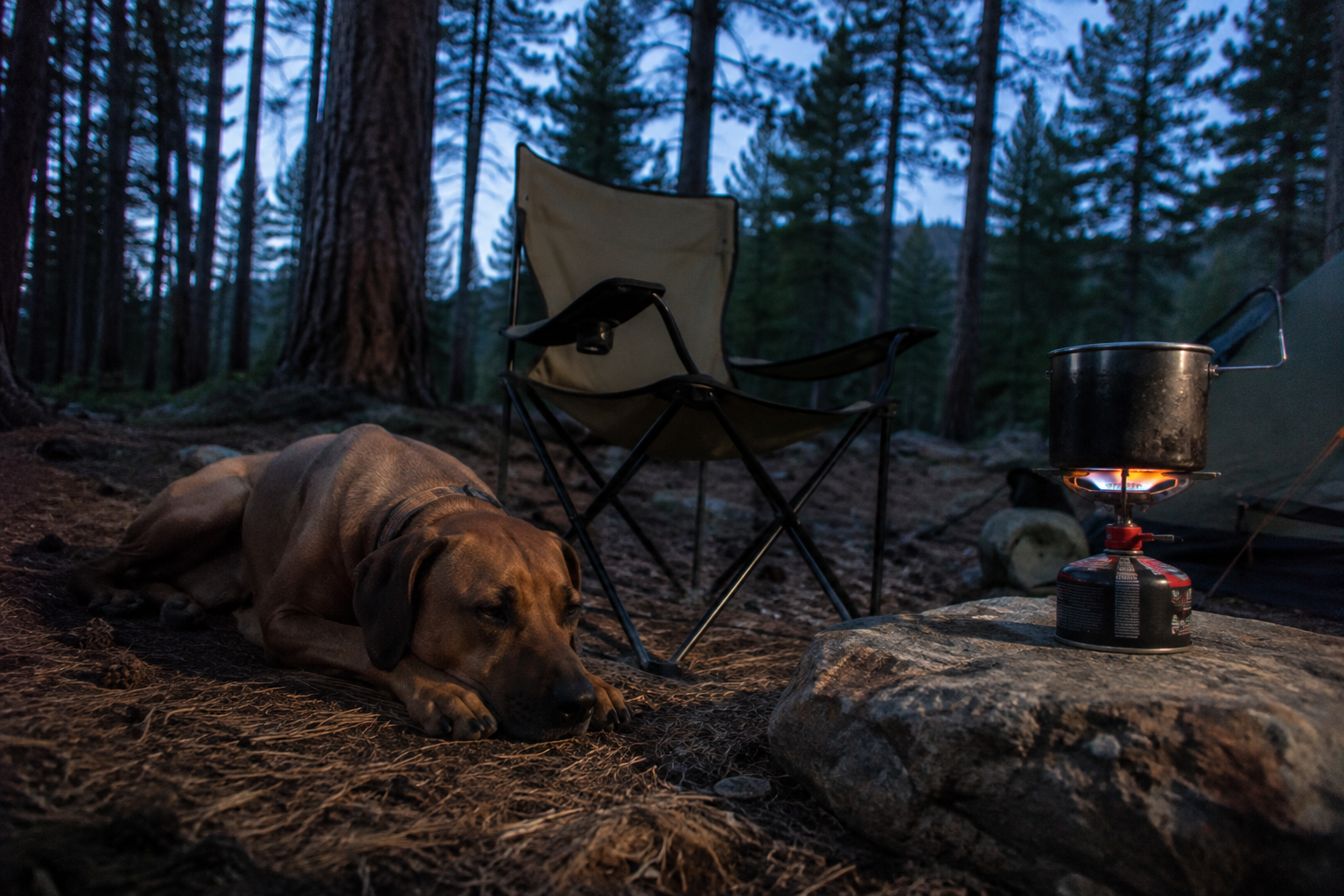
The carve-out that saves most trips: propane and other pressurised gas devices are usually still allowed under both Stage 1 and Stage 2, though there are exceptions. Which is the practical argument for always carrying a gas stove rather than planning to cook over a fire. A stove works in every stage. A fire works in one of them.
Check the current stage for your exact destination the day before you leave. Not the week before.
Bring the stove. Hope for the fire.The only camping advice we give unprompted.
The dog-specific stuff nobody mentions
He needs insulation from the ground, not just a blanket
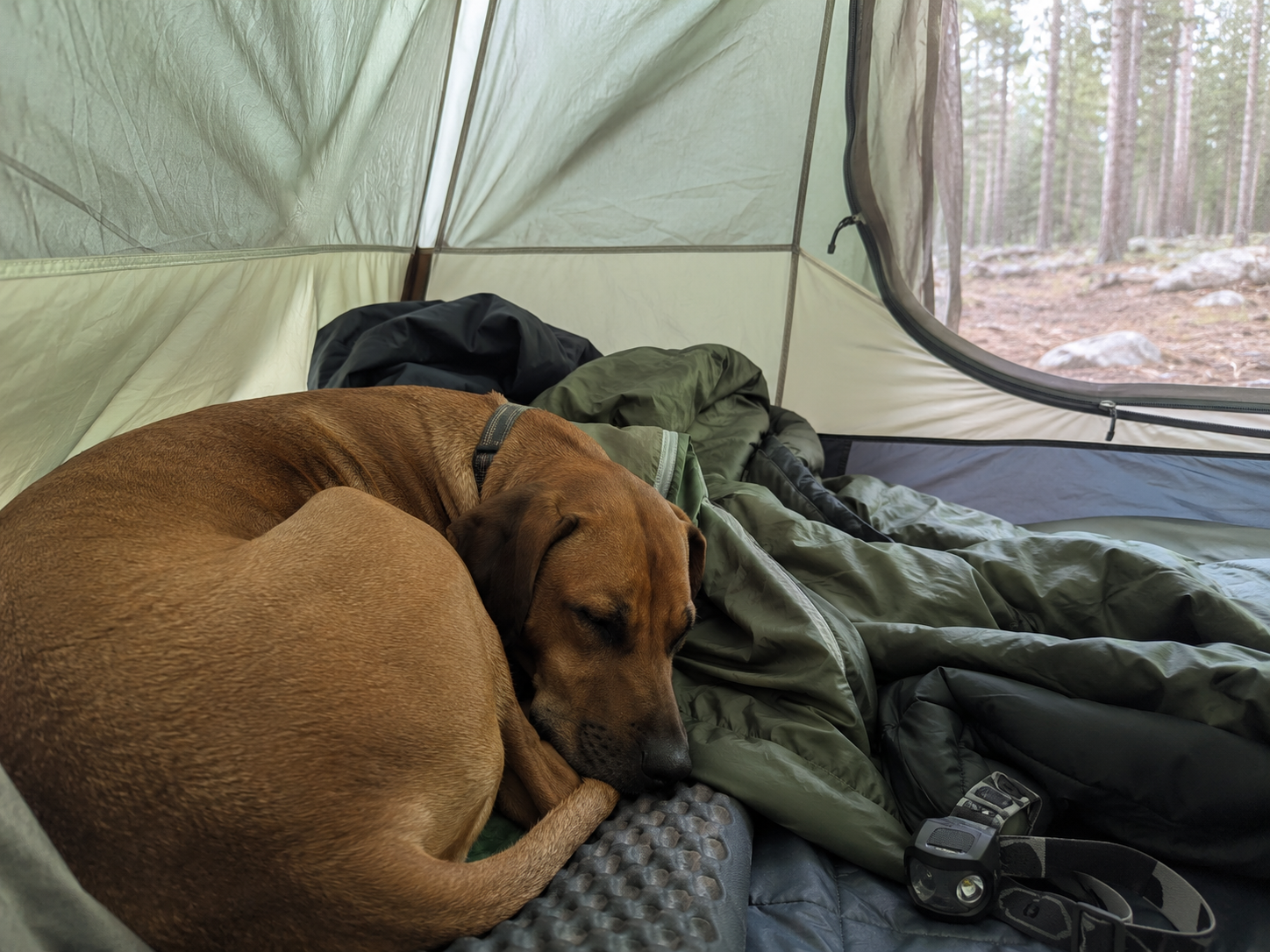
Cold ground pulls heat out of a dog the same way it does out of you, and at altitude the temperature drops hard after dark even in July. A blanket on bare tent floor doesn’t solve it. Something with a bit of loft or foam underneath him does. A cheap closed-cell foam pad is plenty.
His food is a bear attractant too
People are careful with their own food and then leave a bag of kibble in the tent vestibule. Store his food exactly the way you store yours — in the vehicle or a hard-sided container, never in the tent. Same goes for the bowl he ate out of and any treats in your jacket pocket.
Give him a way to be findable in the dark
A light-up collar is one of those small purchases that turns out to be worth far more than it costs, the first time a dark-coated dog wanders eight feet outside the ring of your headlamp.
Never tie him up and walk away
A dog tied and unattended at a campsite is a dog that can tangle, panic, or meet something with claws while you’re at the toilet. A long lead is great when you’re sitting right there. It isn’t a babysitter.
In a developed campground, think about the barking
Sites are close together and sound carries. A dog who’s had a proper day out is a dog who sleeps. A dog who’s been in the car for six hours and then asked to settle at a strange site is going to have opinions about every raccoon in the district, and your neighbours will hear all of them. Hike first. Camp second.
About that first night
The honest picture: it’s rarely restful. Every rustle outside is, in his professional judgement, worth a full investigation. Some dogs pace. Some park themselves against the tent door like a bouncer. Some do the low warning noise at a pine cone falling forty feet away.
It gets better, usually by the second night and reliably by the third trip. What helps is a tiring day beforehand, his own bed or blanket from home so the tent smells like something familiar, and you being visibly relaxed about the whole thing — dogs read your body far more than your words.
What doesn’t help is a first trip that’s also his first long drive, first high altitude, and first night away from home all at once. If you can, break one of those in separately.
The night-before check
Five things, in this order. Takes ten minutes and it’s the difference between arriving and improvising.
- Check the current fire stage for your exact destination. This changes fastest and matters most.
- Check the forest’s alerts page for closures, camping orders, and any seasonal restrictions.
- Confirm you have a gas stove and fuel, regardless of what the fire stage says today.
- Pack his insulation, his food in a hard container, and a light for his collar.
- Screenshot the nearest emergency vet and the route out. Your signal will not be there when you need it.
Then don’t overplan the rest. The point of a dispersed site is that you get to find it when you arrive.
Where to point yourself
Colorado has eleven national forests and a very large amount of BLM ground, and most of it is open to dispersed camping unless a specific area is posted closed. The White River, the Pike-San Isabel, the San Juan, the Arapaho and Roosevelt — all of them have forest roads with clearings on them.
The practical rule of thumb is that the further you get from the Front Range and the I-70 corridor, the easier it is to find a site that isn’t already taken by Friday afternoon. Some of the busiest districts near Denver and Boulder have standing orders restricting camping to designated sites only, precisely because they get hammered.
Which is the honest reason we’ve spent a few years building an actual list rather than just naming forests. Knowing that dispersed camping is legal across millions of acres doesn’t help much on a Friday when you need somewhere specific to sleep tonight.
The part that takes years
Rules you can learn in an afternoon. Knowing which forest roads have clearings, which sites hold water access, which stretches are quiet on a holiday weekend, and which ones are worth the drive with a dog in the back — that’s the part that takes years and a lot of wrong turns. We’ve been putting it together destination by destination, starting here.
See the Colorado Dog Adventure GuideCheck these before every trip
- Current fire restrictions — Colorado Division of Fire Prevention and Control, plus your specific land manager
- Forest orders, closures, and camping restrictions — the relevant National Forest’s alerts page
- Dispersed camping rules on BLM land — BLM Colorado field office for your area
- Rocky Mountain National Park pet regulations — National Park Service